Built by Someone Who Knows the Kitchen
Sukhmanpreet Singh spent years watching good food businesses fail for entirely preventable reasons. CloudurKitchen is what he built to fix that.
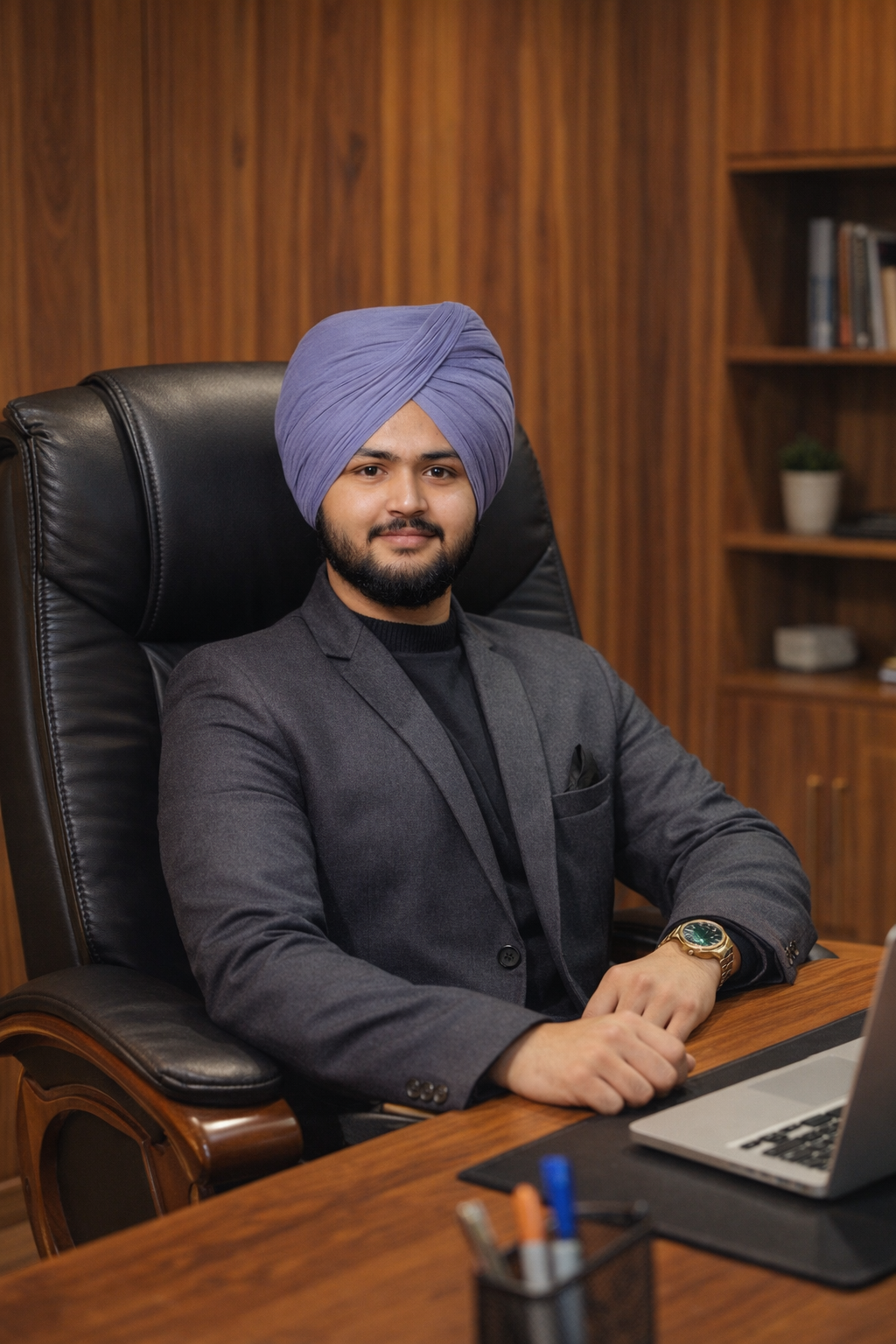
Sukhmanpreet Singh
"The future of food is internet-first, data-driven, and ruthlessly efficient."
Sukhmanpreet Singh started consulting in Punjab's F&B space in 2019 — not with a grand plan, but because he kept seeing the same problems. Restaurateurs with genuinely good food, failing because nobody had thought through the margins, the menu size, or what it actually costs to run a kitchen once the opening buzz fades. He went in, worked directly with these owners, and learned the hard way what separates a business from a busy kitchen.
Over the next few years, he built menus from scratch, set up kitchen workflows, negotiated with vendors, and watched businesses he helped build go from chaos to cash flow — and sometimes back again. By 2021 he was convinced that cloud kitchens, done properly, were a better model than most dine-in setups. By 2022, he incorporated Abiding Ventures to do this at scale, with a proper structure. CloudurKitchen came out of that — a framework built on keyword demand data pulled from Swiggy and Zomato, cuisine positioning based on what actually sells in a locality, tight COGS discipline, and SOPs that mean the kitchen doesn't fall apart if one person calls in sick.
The 3× Revenue Model — running 6 brands from 1 kitchen — is the core of what he built. It's not a theory. CloudurKitchen now has 12+ delivery-first brands across Punjab, each built using that same process. The numbers that came out of it are documented on the franchise page, and they haven't been rounded up to look better.
Five Years. One Mission.
Three Principles That Drive Everything
Menus built on gut feel fail at scale. Before a brand is named, let alone cooked, the keyword search volumes on Swiggy and Zomato for that cuisine and pin code get pulled. What people are ordering in that locality, what price points are moving, which categories are oversaturated — that analysis comes first. The food follows the data, not the other way around.
A great restaurant that can't run without its founder is a trap. We build businesses that run on SOPs, documented recipes, and trained staff — so you own an asset, not a job.
On Swiggy and Zomato, an unnamed kitchen competes purely on price and proximity. The moment a competitor opens 500 metres closer, you lose. A real brand — one with a name people remember, packaging they recognise, and a positioning that means something — earns repeat orders that algorithms can't easily take away. That's the difference between a listing and a business.
Mission & Vision
Food entrepreneurship in India doesn't have a talent problem — it has a systems problem. Most people who start a food business know how to cook. Very few know how to build something that runs without them, scales without chaos, and makes money consistently past month six. That's the specific problem CloudurKitchen is set up to solve.
The big QSR chains — McDonald's, Domino's, the rest — have entire teams doing demand analysis, menu engineering, franchise support, and SOP documentation. An independent food entrepreneur in Punjab gets none of that. The long-term goal is to close that gap: give independent operators the same tools and institutional knowledge, without requiring them to build a corporate headquarters to access it.
Chefs. Brand Managers. System Builders.
The people working on CloudurKitchen brands aren't generalists. The chefs understand cloud kitchen prep flow — high-volume, time-constrained, packaging-sensitive. The brand managers know how Swiggy and Zomato ranking algorithms work, what photos convert, what menu copy gets clicked. These aren't things you learn in a hotel management course; they come from building and running live brands through trial and a fair amount of error.
When a new brand goes live, the team is involved until the numbers are stable — handling the listing setup, the early rating push, the menu adjustments that almost always need to happen in the first 60 days. The handover to the franchisee happens after that, not before.
Build India's Next Food Empire With Us
CloudurKitchen operates at the convergence of culinary craft, commercial kitchen ergonomics, and delivery aggregator algorithms. We build and scale high-velocity food brands across India. Explore key career pathways offered in our business model.
Gain mastery running 4 to 6 specialized virtual brands off a single synchronized line — learning high-density cloud production.
No gut-feel recipes. Formulate dishes backed by Swiggy/Zomato keyword heatmaps, texture retention trials, and gram-level COGS spreadsheets.
Grow alongside incubated brands. High performers transition into regional brand managers, executive R&D chefs, and franchise operations directors.
Roles in Our Business Model
Head Culinary R&D Chef
Lead recipe development, spice-blend IP formulation, and 30-minute delivery texture preservation for brands like Sehbazz Biryani, The Burger Studio, and Crixpenn.
- Formulate and test standardized gram-precise recipe cards for multi-brand deployment
- Conduct blind taste panels, delivery transit stress-tests, and oil/crispness retention trials
- Engineer base gravies, marinades, and seasoning blends keeping food cost strictly under 30%
- Train kitchen staff and franchise partners on exact assembly and plating SOPs
Kitchen Operations & Floor Manager
Direct the daily kitchen floor operations where 4 to 6 brands operate from shared stainless-steel stations, ensuring order speed and strict hygiene.
- Maintain Kitchen Prep Time (KPT) strictly under 10 minutes during peak order rushes
- Manage station layout and unidirectional flow: Raw Receiving → Cold Prep → Hot Line → Dispatch
- Oversee daily stock audits, raw material procurement, cold-chain logs & waste logs
- Coordinate seamless rider handover at dedicated Swiggy & Zomato dispatch hatches
Aggregator Growth & Listing Specialist
Drive digital storefront sales across Swiggy, Zomato, and Magicpin. Optimize digital catalogs, run profitable performance ad campaigns, and defend customer ratings.
- Manage listing SEO, high-CTR dish photography placement, and sensory menu copywriting
- Configure high-AOV meal combos, family buckets, dynamic discounting & promotional coupons
- Monitor store telemetry (rider wait times, defect rates, customer review sentiment)
- Run ROAS-targeted platform CPC advertising campaigns during prime lunch and dinner windows
AutoCAD Kitchen Layout & MEP Designer
Transform raw commercial real estate (150–600 sq. ft.) into ergonomically optimized, high-output multi-brand production facilities with zero spatial bottlenecks.
- Draft 2D & 3D AutoCAD floor plans dividing spaces into uncrossed linear production zones
- Specify commercial kitchen ventilation hood CFM, fresh-air intake & grease-trap ducting
- Generate comprehensive commercial equipment BOQ (Bill of Quantities) with electrical load specs
- Supervise civil, plumbing, electrical (MEP) fit-out execution with local contractors
Franchise Partner Success & Audit Lead
Guide our FOFO and BOT franchise partners from contract signing to profitable operational launch. Conduct mystery audits and ensure 100% brand fidelity.
- Hand-hold franchise partners through the 30-day onboarding checklist and launch calendar
- Conduct on-site kitchen staff training on gram-precise recipe SOP binders and station notes
- Perform quarterly operational mystery audits for taste consistency and food hygiene
- Review partner monthly P&L performance to provide margin optimization recommendations
Station Line Cooks & Commi Chefs
Execute high-volume orders for our delivery brands (Biryani, Fried Chicken, Gourmet Smash Burgers, Loaded Fries) using simplified color-coded sticky SOP guides.
- Assemble and cook dishes to exact gram measurements in under 8 minutes per ticket
- Manage station prep (dum pots, deep fryers, smash flat-tops, or cold garnish line)
- Maintain spotless station hygiene, clean-as-you-go discipline, and cold storage rotation (FIFO)
- Ensure packaging integrity: tamper-evident seals, steam vent checks & condiment inclusion
Apply for a Position at CloudurKitchen
Whether you are a seasoned executive chef, an operations hawk, or an ambitious line cook — we want to hear from you. Submit the direct application below or connect instantly on WhatsApp.